
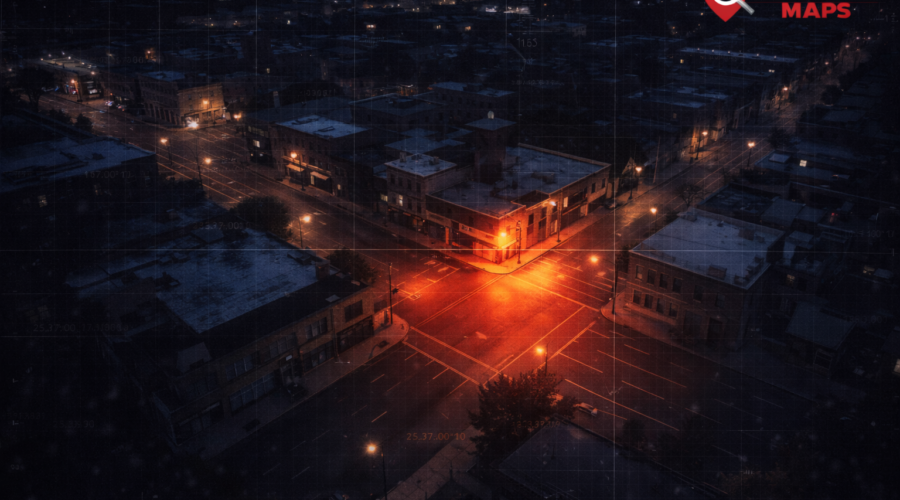
Why Crime Clusters in “Micro-Zones” Within Cities
Chicago
Los Angeles
New Orleans


Introduction: Crime Isn’t Evenly Distributed
When people think about crime, they think in city-wide terms:
“Chicago has high crime.”
“Los Angeles is dangerous.”
“New Orleans has violence.”
But when you map incidents precisely, something more interesting appears:
Crime rarely spreads evenly across a city.
Instead, it clusters into extremely small geographic areas — sometimes just a few blocks wide.
These are called micro-zones, or crime hot spots.
Understanding them changes how we think about safety, prevention, and urban design.
1. The 80/20 Reality of Crime
Criminology research consistently shows:
A small percentage of locations account for a large percentage of crime.
In many cities:
- 5–10% of streets account for over 50% of violent incidents.
- A handful of intersections become repeat sites.
This is not coincidence.
It’s structural concentration.
Crime doesn’t “spread.”
It gravitates.
2. Transit Corridors Create Convergence
Look at downtown areas in:
- Chicago
- Los Angeles
- New Orleans
Micro-zones often appear near:
- Major train stops
- Bus terminals
- Highway off-ramps
- Bridges
- Pedestrian-heavy corridors
Why?
Because these areas maximize what criminologists call convergence settings:
- High foot traffic
- High anonymity
- Easy escape routes
Opportunity increases where people intersect quickly and disperse easily.
3. Entertainment Districts After Dark
Another pattern appears around:
- Bar districts
- Music venues
- Casino areas
- Late-night food corridors
These zones combine:
- Alcohol
- Crowds
- Emotional volatility
- Reduced inhibition
The time factor matters.
An intersection may be quiet at 2 p.m.
But at 1:30 a.m., it transforms into a high-risk environment.
Micro-zones are often time-dependent.
Mapping by hour reveals entirely different cities at night.
4. Economic Transition Zones
One of the most overlooked patterns:
Crime clusters frequently appear in economic borderlands.
These are areas where:
- Affluent neighborhoods meet distressed ones
- Gentrification is underway
- Commercial and residential areas mix
Why?
Because economic transition creates instability:
- Rapid rent increases
- Displacement
- New nightlife development
- Increased outsider traffic
These shifts temporarily disrupt social cohesion.
When cohesion drops, incidents rise.
5. Routine Activity Theory in Action
Crime happens when three elements intersect:
- Motivated offender
- Suitable target
- Lack of capable guardianship
Micro-zones are locations where these three overlap repeatedly.
For example:
A busy nightlife street:
- Motivated offenders: individuals seeking confrontation or opportunity
- Suitable targets: distracted, intoxicated individuals
- Lack of guardianship: limited visible enforcement in side streets
The pattern repeats nightly.
The location becomes statistically predictable.
6. Design Influences Behavior
Urban design matters more than people realize.
High-risk micro-zones often include:
- Poor lighting
- Blind corners
- Long alleyways
- Underpasses
- Vacant storefronts
- Parking lots without visibility
Environmental criminology calls this Crime Prevention Through Environmental Design (CPTED).
Simple changes can reduce incidents:
- Improved lighting
- Open sight lines
- Increased foot patrol visibility
- Mixed-use development
- Active storefronts
Geography influences behavior.
It doesn’t excuse it — but it shapes opportunity.
7. Why Policing Alone Doesn’t Erase Hot Spots
When police increase patrols in hot zones, crime often:
- Temporarily decreases
- Displaces to nearby blocks
- Returns once patrol intensity drops
This suggests the zone itself — not just the individuals — is contributing to recurrence.
Micro-zones are structural.
You can’t solve structural issues solely through enforcement.
You must change the environment.
8. Mapping Changes Perspective
When you zoom out to city level, you see noise.
When you zoom in to street level, you see concentration.
At True Crime Maps, plotting cases geographically reveals:
- Repeat intersections
- Shared corridors
- High-density blocks
- Transitional neighborhoods
The city isn’t uniformly dangerous.
Certain blocks are disproportionately active.
That nuance matters.
It shifts the narrative from fear to analysis.
9. Why This Is Important
Understanding micro-zones:
- Improves targeted prevention
- Helps allocate resources effectively
- Prevents overgeneralizing entire cities
- Reduces stigma against large communities
Instead of saying:
“This city is unsafe.”
We can say:
“This 4-block corridor has recurring structural risk factors.”
Precision improves policy.
Conclusion: Crime Has Coordinates
Crime is not random.
It has coordinates.
It follows:
- Foot traffic
- Infrastructure
- Economic change
- Visibility gaps
- Time patterns
When you map incidents instead of just recounting them, patterns emerge that storytelling alone cannot reveal.
Cities aren’t dangerous.
Certain blocks — under certain conditions — are.
And geography is the key to understanding why.

