Why Rural Disappearances Are Harder to Solve
Yosemite National Park
Appalachian Trail
Red Oak


Introduction: When Geography Becomes the Suspect
In cities, disappearances leave trails.
Cameras.
Witnesses.
Transit data.
Cell tower pings.
In rural environments, geography itself becomes the primary obstacle.
Across the United States, disappearances in remote areas consistently prove more difficult to resolve — not because they are more mysterious, but because the environment erases evidence faster than investigators can collect it.
When you map these cases, a pattern becomes clear:
The larger the land mass per capita, the harder the recovery.
1. Scale vs. Search Resources
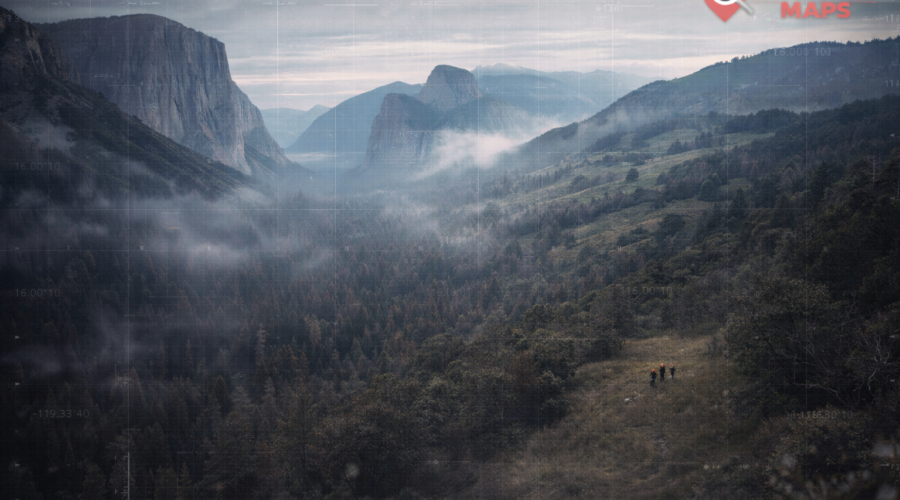
Consider the size of Yosemite National Park.
Nearly 1,200 square miles.
Now compare that to the average sheriff’s department manpower in a rural county.
Search and rescue teams rely on:
- Volunteers
- Limited air support
- Weather windows
- Grid search methods
Even with helicopters and thermal imaging, terrain density — forests, cliffs, rivers — limits visibility.
In many rural disappearances, the search area expands exponentially with every passing hour.
Time is not neutral in remote terrain.
It works against investigators.
2. Terrain Destroys Evidence
Urban crime scenes are contained.
Rural environments are dynamic.
In forests and mountainous regions:
- Rain washes away footprints
- Animals scatter remains
- Temperature fluctuations degrade DNA
- Wind alters ground impressions
- Flooding reshapes landscapes
Evidence can be lost within days — sometimes hours.
Along trails like Appalachian Trail, thousands of hikers move through the same area weekly.
By the time a disappearance is reported, the original scene may already be compromised.
Nature does not preserve evidence.
It consumes it.
3. Sparse Witness Networks
Cities produce witnesses through density.
Rural areas do not.
In small towns near places like Red Oak:
- Homes may be miles apart
- Roads may have little traffic
- Surveillance cameras are rare
- Cell service may be unreliable
If someone disappears from a trailhead or remote property, there may be no third-party observer at all.
No one to confirm:
- When they arrived
- When they left
- Who else was present
That absence of witnesses slows investigations immediately.
4. Jurisdiction Complications
Rural cases often cross boundaries:
- County lines
- State lines
- Federal land vs local land
- Tribal jurisdictions
Each boundary introduces:
- Reporting delays
- Communication gaps
- Administrative friction
National parks, forests, and reservation lands can involve multiple agencies.
Coordination takes time.
Time reduces solvability.
5. Technology Gaps
In urban disappearances, investigators can rely on:
- License plate readers
- Metro surveillance systems
- Traffic cameras
- Retail CCTV
- Rideshare data
In rural areas, these systems rarely exist.
Cell phone tracking may be limited due to sparse towers.
GPS tracking is only helpful if devices are recovered.
Once a phone battery dies in a forest or desert, the digital trail often ends.
6. The Psychology of Isolation
Isolation changes behavior.
In remote areas:
- People take more risks
- Help is farther away
- Decision-making may shift under stress
A simple misstep — dehydration, a fall, exposure — can escalate quickly.
And when accidents occur far from populated zones, survival windows shrink dramatically.
Many rural disappearances may begin as accidents rather than crimes.
But without witnesses or immediate response, the outcome becomes indistinguishable from foul play.
7. Volunteer Search Limitations
Rural communities often mobilize quickly.
But volunteer searches have constraints:
- Limited training
- Inconsistent grid coverage
- Fatigue
- Emotional bias
Search fatigue sets in fast.
After the first 72 hours, participation typically declines.
And statistically, the first 72 hours are the most critical.
8. Media Coverage Differences
Urban disappearances often receive:
- Immediate news coverage
- Social media amplification
- Public tips
- Pressure on authorities
Rural disappearances may receive minimal regional coverage.
Without national exposure, tip volume remains low.
Public awareness directly impacts resolution.
9. Mapping Reveals a Clear Pattern
When plotting disappearances geographically, you’ll notice:
- Large national parks contain clusters
- Mountainous regions show recurring incidents
- Remote private property cases remain unsolved longer
- Low-density counties have lower clearance rates
The correlation isn’t supernatural.
It’s structural.
More land.
Fewer witnesses.
Less technology.
Faster environmental degradation.
10. Why This Matters
Understanding rural disappearance patterns helps shift the narrative away from:
- Paranormal speculation
- Conspiracy theories
- Sensational storytelling
And toward:
- Search protocol improvement
- Resource allocation
- Better coordination between agencies
- Improved emergency tracking systems
Geography doesn’t create mystery.
It creates complexity.
Conclusion: The Landscape Is the Variable
In cities, people disappear into crowds.
In rural environments, they disappear into terrain.
The difference matters.
Mapping these cases shows that:
The environment is often the strongest force shaping the investigation.
And until search technology advances to match the scale of rural America, these disappearances will continue to challenge even the most experienced investigators.

